Why Your Mat Grip Changes When the Outside Air Gets Drier
Quick Answer: Hot yoga studios control temperature far more tightly than they control humidity, and outdoor humidity feeds directly into the room every time the door opens and through the ventilation system. When outdoor dew point falls in autumn, studio relative humidity often drops by 10 to 20 percentage points even at the same thermostat setting. Drier air means your mat surface dries faster between poses, your palms produce less surface moisture early in class, and the grip you had calibrated all summer disappears in the first twenty minutes. The fix is a towel and a deliberate pre-class dampening, not a new mat.
Same studio, same mat, same class, same teacher. Since the weather turned you are sliding in the first sequence in a way you never did in July.
This is a well-defined and entirely fixable problem, and it is about humidity rather than heat.
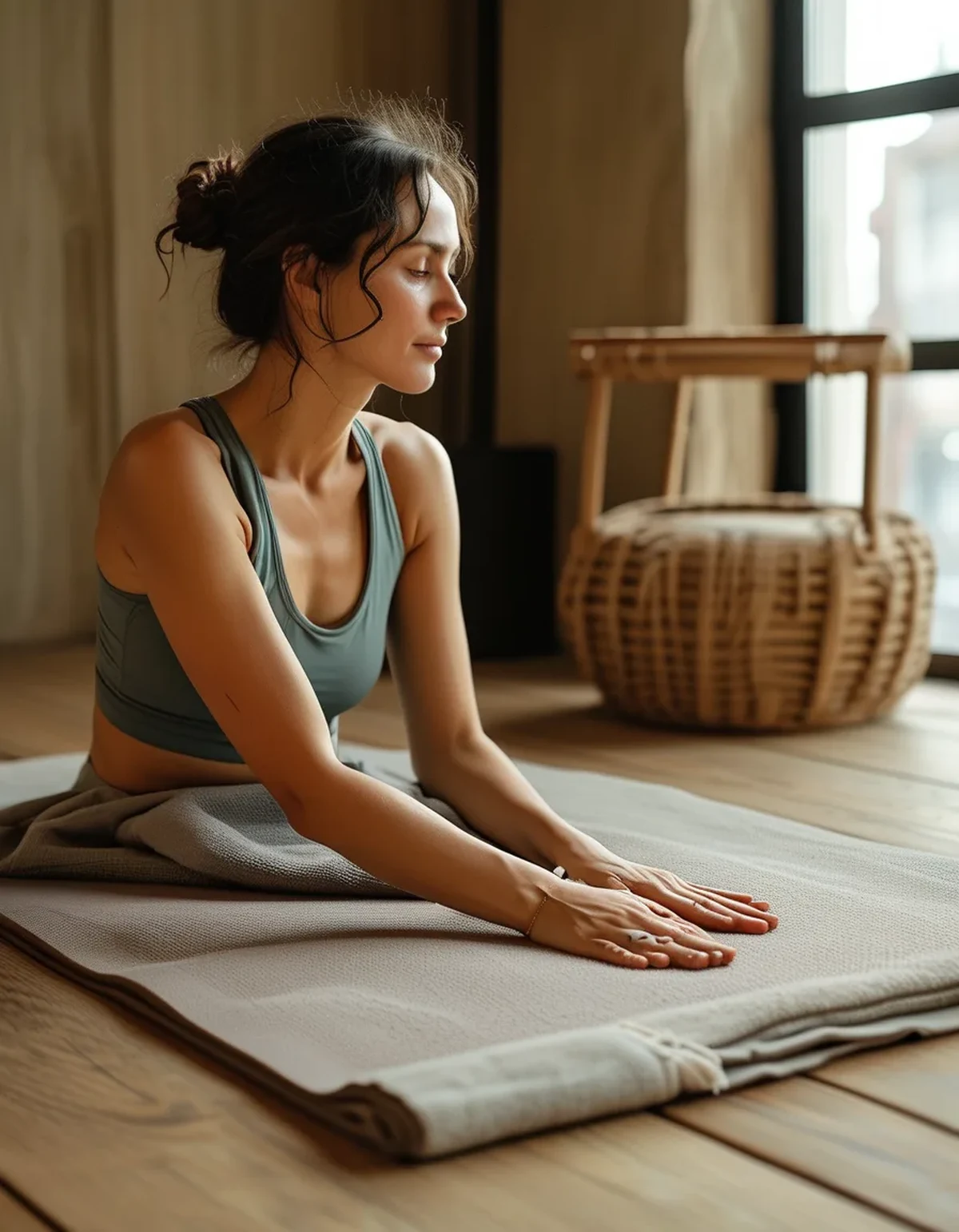
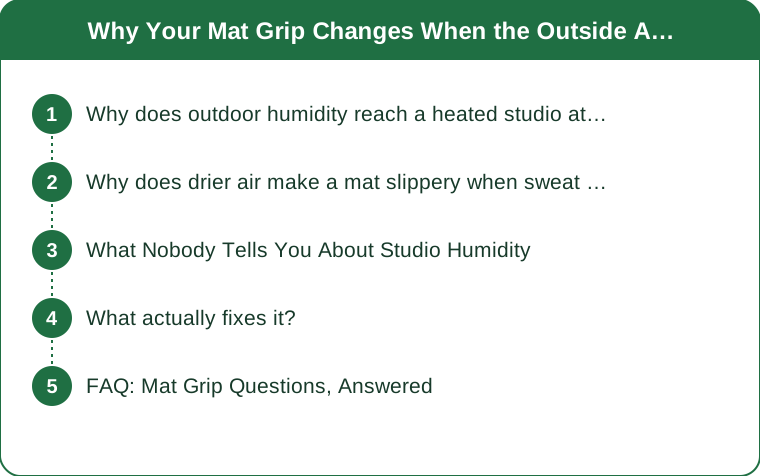
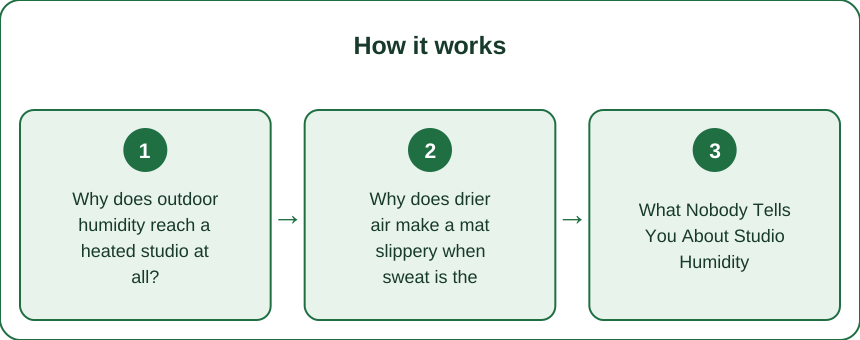
Why does outdoor humidity reach a heated studio at all?
Because studios heat air, they do not usually humidify it, and the air comes from outside.
Most hot yoga rooms are controlled on temperature. Humidity is either uncontrolled, or controlled loosely with a humidifier that runs to a target the studio rarely publishes. Bikram-style rooms traditionally specify around 40 percent, but many studios running hot vinyasa or general hot yoga do not target humidity at all.
Heating air lowers its relative humidity without changing the amount of water in it. Take outdoor air at 60F and 70 percent relative humidity, heat it to 95F, and its relative humidity falls dramatically - the water content is unchanged but the air can now hold far more.
So the studio’s humidity is largely a function of the outdoor dew point, plus whatever moisture the class itself contributes through sweat and breathing.
Dew point is the number that matters, not relative humidity outside. A summer morning with a 68F dew point and an October morning with a 45F dew point produce very different rooms at the same thermostat setting.
Which is why the change arrives suddenly. The first properly dry high-pressure system of autumn drops the dew point sharply over a day or two, and the studio feels different that week. It is not the studio changing its settings - it is the air supply changing.
The confirming sign: the room feels hotter and harsher despite the same temperature, and you sweat later into the class than usual. Both are dry air.
Why does drier air make a mat slippery when sweat is the usual culprit?
Because most mat grip has an optimum moisture level, and both too little and too much are bad.
This is the part that confuses people, because in summer the complaint is that too much sweat makes the mat slippery, and in autumn the complaint sounds identical but the cause is the opposite.
Open-cell mats - natural rubber, polyurethane-topped mats and suede-finish towels - grip better when slightly damp. The surface is designed to absorb a small amount of moisture, which increases friction. Bone dry, they are noticeably slicker.
Closed-cell mats - PVC and TPE - are the reverse. They rely on texture and repel moisture, so they grip well dry and become genuinely slippery once a film of sweat sits on the surface.
So the same weather change produces opposite problems depending on your mat. If you have a PU or rubber mat and it went slippery in September, that is dryness. If you have a PVC mat and it went slippery in July, that was sweat.
There is a second effect at the hands. Palmar sweating starts later in dry air, because the sweat response is partly driven by the humidity-modulated sensation of heat. You sweat later into the class, so the first twenty minutes are drier at the hands than they were in summer.
And evaporation is faster. Any moisture that does reach the mat leaves quicker in dry air, so the equilibrium you had settled into does not re-establish itself between poses.
What Nobody Tells You About Studio Humidity
The room changes across the day and across the class. The first class of the morning is in a room that has been heated overnight or from cold with no bodies in it - driest conditions of the day. By the third or fourth class, accumulated sweat and respiration have raised the humidity significantly. If your grip problem only happens at the 6am, that is why.
Where you place your mat changes your local humidity. Near a heat vent or a door, air is drier and moving. In the middle of a full room, surrounded by other people, local humidity is meaningfully higher. Moving your mat two rows in from the door is a real intervention, not a superstition.
Studios with humidifiers do not always run them. Many run them seasonally or when someone remembers, and the change from summer to autumn is exactly when the setting matters and least likely to have been reviewed. It is a reasonable thing to ask about, and studios generally appreciate specific feedback over a vague complaint about the room.
New mats need breaking in and dry air makes it worse. Most rubber and PU mats have a factory surface film that reduces grip until it wears off over the first few weeks. A new mat bought in September will feel far worse than the same mat bought in June, because the dry air removes the moisture that would otherwise partially compensate.
Your hands are drier too, for a separate reason. Autumn hand washing, heating and reduced ambient humidity all reduce skin hydration, and dry, slightly rough skin has a different friction profile against a mat than supple skin does. Hand cream the night before, not before class, genuinely helps.
What actually fixes it?
A towel, deliberate pre-dampening, and mat placement - in that order of reliability.
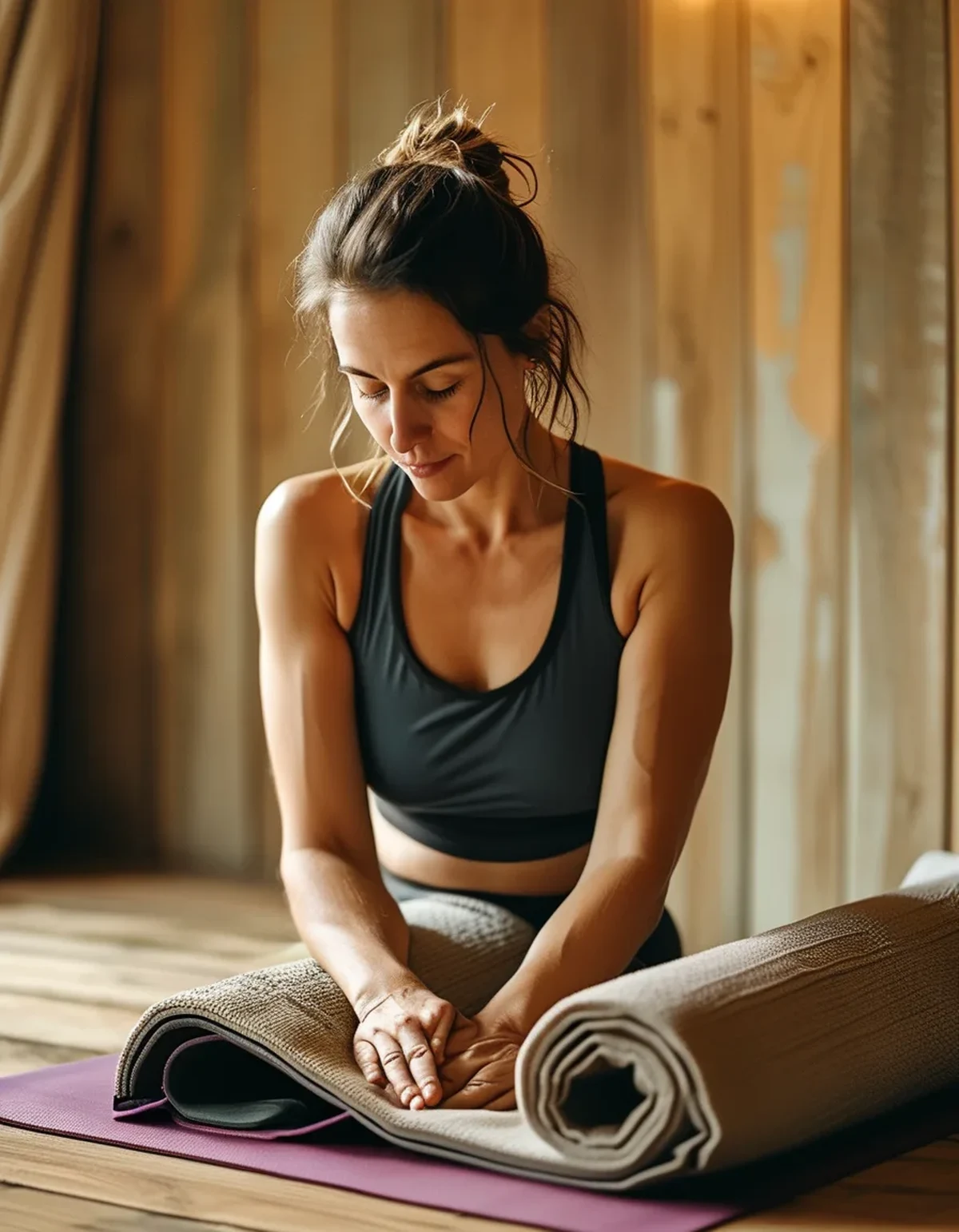
A grip towel is the direct solution and it is not a compromise. A microfiber hot yoga towel with a silicone-dot backing solves this problem essentially completely: it holds moisture where you want it, it does not depend on the mat surface, and it works in both directions of the problem.
Dampen it before class. A dry grip towel is worse than no towel at all - the whole design assumes moisture. Spray it lightly, or wet your hands and press them into the areas where they will land. Most experienced hot yoga practitioners do this as routine.
Pre-dampen the mat itself if you are not using a towel. A light spray on the hand and foot zones five minutes before class, letting it soak rather than sit as droplets. Water plus a tiny amount of witch hazel or a dedicated mat spray evaporates less quickly than plain water.
Move your mat away from vents and doors and toward the middle of the room.
Wash the mat. Accumulated body oil, lotion and sweat residue on a PU or rubber mat build a film that reduces grip gradually, and it is often blamed on the season. A proper wash at the start of autumn restores more grip than people expect - and use water and mild soap, not alcohol-based cleaners, which degrade PU and rubber surfaces over time.
And skip lotion on hands and feet on class days. It is the single most common self-inflicted grip problem, and it is worse in autumn precisely because dry skin makes people reach for it more.
This is general information, not medical advice. If you are slipping to the point of losing control in weight-bearing poses, take the modification rather than the pose - wrist and shoulder injuries in hot yoga are frequently slip-related.
FAQ: Mat Grip Questions, Answered
Should I buy a different mat for winter?
Usually not - a grip towel solves the problem for a fraction of the cost and works on top of whatever you already own. If you are replacing a mat anyway and you practise mostly hot, a polyurethane-topped mat with a towel is the standard combination for a reason: it handles both the dry-start and the sweaty-middle phases of a class.
Why does my mat grip well at home and badly in the studio?
Your home is cooler and typically more humid than a heated studio, and you are not sweating on it. That combination sits in the good part of the moisture curve for most mats. The studio is drier at the start of class and much wetter by the end - two different failure conditions in one hour, which is why studio grip is a genuinely harder problem than home grip.
Does it help to wash my hands before class?
Yes, and it is underrated. It removes lotion, oils and residue, and it leaves the skin slightly damp - which is the state you want at the start of a dry-air class. Dry them only partially rather than thoroughly.
Is a slippery mat actually a safety issue or just annoying?
It is a genuine safety issue in weight-bearing poses, particularly downward dog, plank and any arm balance where a hand slipping forward loads the wrist or shoulder suddenly. If your hands are sliding, take a lower or modified version until the grip is fixed rather than gripping harder - overgripping is itself a common source of wrist strain.
TL;DR:
- Studios control temperature, not humidity - outdoor dew point feeds straight into the room.
- Heating air drops its relative humidity, so a dry autumn day makes a much drier studio at the same thermostat setting.
- Rubber and PU mats need slight dampness to grip. Bone dry, they are slicker - the opposite of the summer problem.
- Palmar sweating starts later in dry air, so the first twenty minutes are the vulnerable window.
- A grip towel, dampened before class, is the direct and complete fix.
- Move away from vents and doors, and note that the first class of the day is in the driest room.
- Wash the mat and skip hand lotion - accumulated film and lotion are the two most common self-inflicted causes.
The mat did not change. The air supply did.
See It in Motion
Seen here: Bootcut Capri Yoga Pants with Pockets — shop similar styles on bubblelime.com
Keep Reading
This article is for general informational purposes only and is not medical advice. Always consult a qualified health professional for guidance specific to you.