The 20 Minutes After Hot Yoga Matter More in Cold Weather Than the Class Does
Quick Answer: Leaving a hot yoga room, you have elevated core temperature, dilated skin blood vessels, and damp skin — the fastest heat-loss state your body can be in. Cool down indoors for 15 to 20 minutes, change out of damp clothes before you leave, rehydrate with sodium, cover your head, and don’t drive immediately. Most winter hot yoga complaints — chills, headaches, post-class fatigue, and dizziness in the car — trace to this window rather than to the class.
The class was good. Ninety minutes later you have a headache, you’re inexplicably exhausted, and you’ve been cold since you left the building.
That’s not the yoga. That’s a twenty-minute transition that nobody teaches and everybody handles badly.
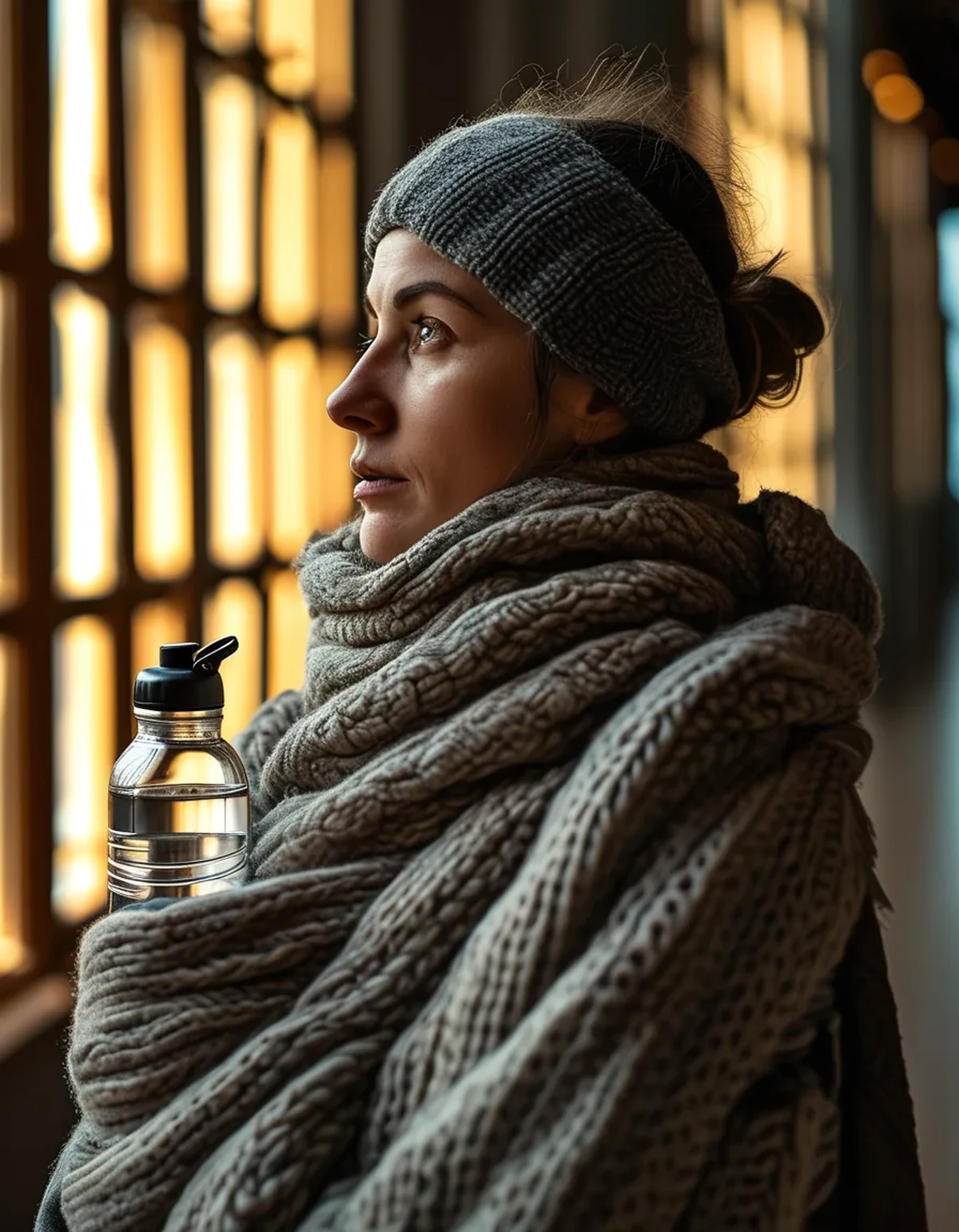
What state is your body actually in when class ends?
Maximally primed to lose heat, and simultaneously down a significant amount of fluid.
Core temperature is elevated — typically 1 to 2°F above baseline after a long hot class, sometimes more.
Peripheral blood vessels are fully dilated. Your body has spent ninety minutes pushing blood to the skin to shed heat. That dilation doesn’t reverse instantly, so for the first fifteen to twenty minutes you’re radiating heat at maximum rate.
Your skin is damp, and evaporation continues, which cools you further and faster.
You’re down 500ml to 1.5 liters of fluid and a meaningful amount of sodium.
Blood pressure regulation is temporarily compromised. Vasodilation plus reduced blood volume means standing up quickly, or moving into cold air where blood vessels suddenly constrict, can produce genuine lightheadedness.
Put all five together and step into freezing air, and the result is a rapid, uncomfortable swing that the body handles by shivering hard — which is exhausting and undoes the entire relaxed state the class produced.
What should the first twenty minutes look like?
Stay inside. Rehydrate. Change. Then leave.
Sit for at least ten minutes before you do anything else. Savasana in the room is the start of this, not the end. Ten more minutes in the lobby lets heart rate and core temperature come down in an environment that isn’t actively fighting you.
Drink something with sodium in it, not just water. After a heavy sweat, plain water alone can leave you feeling worse — 300 to 500mg of sodium in a drink or a salty snack makes a noticeable difference to the post-class flatness people describe.
Change out of everything damp. This is the step people skip and it’s the one that matters most. A dry base layer against skin is the difference between comfortable and chilled for the next hour.
Dry your hair as much as you can, and cover your head. Wet hair in cold air is a significant and continuous heat loss, and it’s the specific cause of the post-class headache many people get.
Put on more than you think you need for the walk out. You will feel warm indoors and cold within ninety seconds outdoors. Dress for how you’ll feel in two minutes, not how you feel now.
Don’t drive immediately. Lightheadedness in the first ten minutes after a hot class is common. Sit, drink, and let it pass before getting behind a wheel.
Why do I get a headache after winter classes?
Usually a combination of dehydration, sodium loss, and the temperature swing — in that order of likelihood.
Dehydration headaches are the most common cause and the easiest to fix. Winter thirst is blunted, so most people arrive at class already down. Front-loading fluids across the day beats drinking a lot afterward.
Sodium loss produces a distinct version — often accompanied by feeling flat, weak, or mildly nauseated. Water alone can worsen it by diluting what sodium remains. This is the headache that responds within twenty minutes to an electrolyte drink.
Cold-induced vasoconstriction is the third mechanism. Going from maximum vasodilation to rapid constriction produces a genuine vascular headache in some people. Covering the head and easing the transition largely prevents it.
Caffeine timing contributes. A morning coffee, a hot class, and no fluid replacement is a reliable headache recipe.
If the headache is severe, sudden, or comes with visual changes, confusion, or vomiting, that’s not a routine post-class headache. Get help. This is general information, not medical advice.
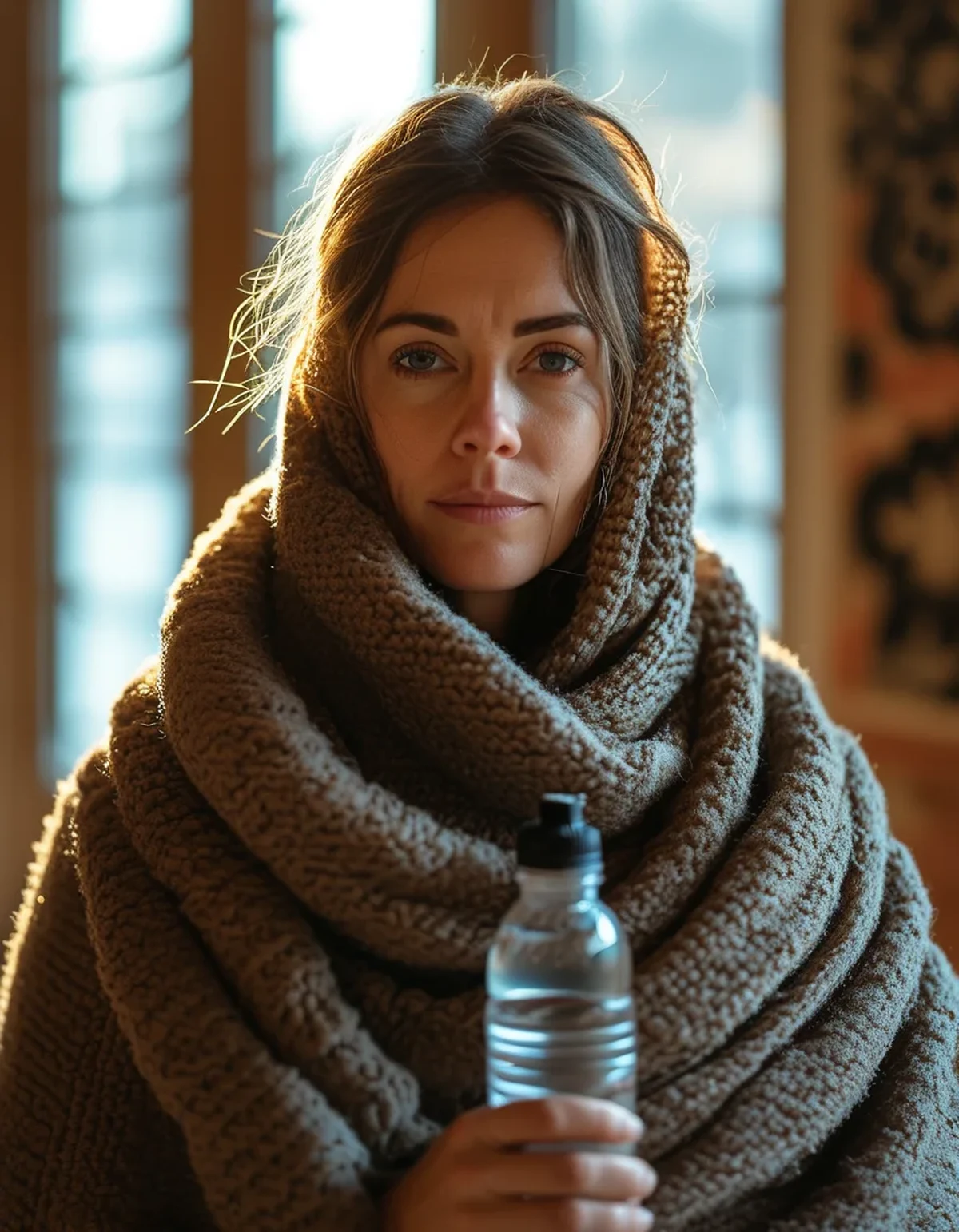
Myth vs Fact: Post-Hot-Yoga in Cold Weather
Myth: You should cool down fast because you’re overheated. Fact: You’re already cooling rapidly. The risk in winter is overshooting into chilled, not staying hot. A gradual return to normal temperature is the goal.
Myth: A cold shower after hot yoga is refreshing and good for recovery. Fact: In summer it’s fine. In winter, adding cold water to a body that’s already losing heat at maximum rate is how you end up shivering for an hour. A warm shower is the better winter choice.
Myth: Drinking a lot of water immediately fixes the dehydration. Fact: Rapid large-volume water intake without sodium can dilute blood sodium and make you feel worse. Steady intake with electrolytes across the following hours works better than a liter in five minutes.
Myth: The damp clothes will dry on the way home. Fact: They’ll evaporate — cooling you the whole time. Evaporative cooling is exactly what you don’t want in 38°F air. Change before you leave.
Myth: If you’re used to hot yoga, the cold transition doesn’t affect you. Fact: Heat acclimation helps in the room and does nothing for the exit. The transition affects experienced practitioners as much as beginners — they’ve just usually learned to manage it.
What should I actually pack in winter?
Five things, and four of them are for after class.
A full dry change of clothes, including underwear and socks. Not just a top. Socks are the single most underrated item — damp socks in cold shoes is genuinely miserable.
A warm hat. Head coverage after a hot class does more for comfort than an extra layer anywhere else, and it addresses the headache mechanism directly.
An electrolyte source. Tablets, a powder, or a pre-mixed drink. Cheap, tiny, and it changes how the rest of the day feels.
A small towel dedicated to drying your hair, separate from your class towel. Wet hair is the thing that keeps you cold longest.
A proper coat, not a hoodie. You’ll be more sensitive to cold for the next thirty minutes than you would normally be. Overdressing for the walk to the car is the correct call in winter.
Optional but worth it: a warm drink in a flask. Something warm immediately after class helps core temperature settle, encourages fluid intake, and is disproportionately pleasant on a cold day.
FAQ: Post-Hot-Yoga Winter Questions, Answered
How long should I wait before going outside?
Fifteen to twenty minutes is a good target — long enough for heart rate and core temperature to settle and for you to change. If you feel lightheaded, wait longer.
Is it dangerous to go straight outside?
For most healthy people it’s uncomfortable rather than dangerous. The genuine risks are lightheadedness leading to a fall or an unsafe drive, and the vascular strain of a fast temperature swing for anyone with a cardiovascular condition — worth discussing with your doctor if that applies.
Should I shower at the studio or at home?
At the studio if the facilities allow — it removes the damp-clothes problem entirely and you leave warm and dry. If you shower at home, changing into dry clothes at the studio is the essential substitute.
Why am I so tired after winter classes specifically?
Shivering is metabolically expensive, and if you got cold on the way home you burned real energy staying warm. Combine that with dehydration and the class itself, and the fatigue makes sense. Managing the transition usually resolves it.
Can I eat straight after class?
Yes, and something with sodium and carbohydrate is genuinely useful. Many people have no appetite immediately after a hot class — in that case, prioritize fluids with electrolytes and eat within the hour.
Does this apply to hot pilates and infrared classes too?
Yes, to any heated class where you leave sweating. The mechanism is identical, and infrared classes in particular can leave you with elevated core temperature even when the room felt less oppressive.
This is general information, not medical advice.
TL;DR: The class ends and the important part starts.
- You leave in the fastest heat-loss state your body can be in — elevated core temperature, dilated vessels, damp skin.
- Stay inside 15 to 20 minutes. Most winter hot yoga problems happen in the parking lot, not the studio.
- Change out of damp clothes before leaving. Evaporation in cold air is exactly what you don’t want.
- Rehydrate with sodium, 300 to 500mg — plain water alone can leave you feeling flatter.
- Cover your head and dry your hair. This addresses the post-class headache directly.
- Warm shower, not cold. In winter you’re already losing heat fast enough.
- Don’t drive immediately if you feel at all lightheaded.
Pack dry socks for the next class. It’s the smallest item on the list and the one you’ll notice most.
See It in Motion
Seen here: High Waist Yoga Leggings with Side Pockets — shop it on bubblelime.com
Keep Reading
This article is for general informational purposes only and is not medical advice. Always consult a qualified health professional for guidance specific to you.