How Long Your Body Actually Stays Elevated After Hot Yoga
Quick Answer: Core temperature typically takes 30-60 minutes to return toward baseline after a hot class, and sweating often continues for 20-30 minutes after you leave the room. Heart rate settles faster but stays modestly elevated. This is why people continue sweating through a shower, feel dizzy on the walk home, and struggle to sleep after evening classes - the class ended but the physiological response did not.
You showered, dressed, and walked out - and you are still sweating through a clean shirt fifteen minutes later, wondering what is wrong with you.
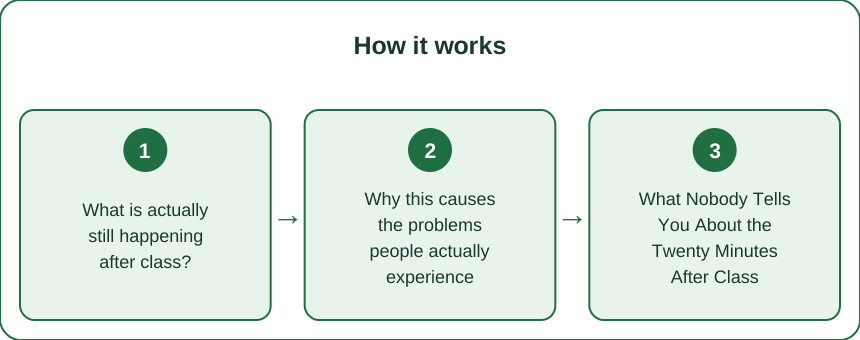
What is actually still happening after class?
Several systems are still winding down, on different timescales.
Core temperature falls slowly. It rises through a hot class and returns toward baseline over roughly 30-60 minutes afterwards, depending on the ambient conditions you move into and how much cooling you actively do. Stepping from a hot studio into a hot street slows it considerably.
Sweating continues until core temperature drops. Sweat is a response to elevated core temperature, not to activity, so it persists after you stop moving and often through a shower. Twenty to thirty minutes of continued sweating is entirely normal.
Heart rate settles faster but not immediately. It falls sharply in the first minutes and then more slowly, often remaining modestly above baseline for 30 minutes or more, driven partly by the continued need to move blood to the skin for cooling.
Blood is still pooled peripherally. Vessels near the skin remain dilated for cooling, which reduces blood available to return to the heart. This is why standing up quickly after class, or standing still in a hot changing room, causes light-headedness.
Fluid deficit persists for hours. You do not rehydrate at the pace you dehydrated. Restoring fluid balance after a heavy sweating session takes hours, not the twenty minutes of drinking on the way home.
Why this causes the problems people actually experience
Each common complaint maps onto one of the mechanisms above.
Dizziness in the changing room is peripheral pooling plus a warm, still environment plus standing up from sitting. Moving to cooler air and sitting down for a couple of minutes resolves it far better than pushing through.
Continuing to sweat after a shower is core temperature still falling. A cool or lukewarm final rinse helps considerably more than a hot shower, which delays the temperature drop.
Struggling to sleep after evening classes is the most common complaint, and the mechanism is clear: sleep onset depends on a falling core temperature, and a class finishing at 8.30pm leaves core temperature elevated well into the evening. Add residual arousal and the effect is substantial.
Feeling drained an hour later rather than immediately reflects the cumulative fluid and electrolyte deficit rather than muscular fatigue. This is why the tiredness after hot yoga feels different from the tiredness after strength training.
Headache appearing later in the evening is usually dehydration, and it is much easier to prevent than to treat. If you regularly get an evening headache after class, your rehydration is inadequate rather than your tolerance being poor.
And feeling cold an hour later is normal too - once core temperature falls and peripheral vessels remain dilated, people often feel chilled, especially in air conditioning.
What Nobody Tells You About the Twenty Minutes After Class
Do not shower immediately in hot water. It feels appealing and it delays cooling, which extends the sweating and the discomfort. Wait a few minutes, then use lukewarm or cool water, particularly at the end.
Sit down before you change. Two minutes seated in cooler air prevents most post-class dizziness, and it costs nothing except being slightly slower out of the building.
The changing room is often the hottest, stillest space in the building. It is where dizziness incidents cluster. If you feel wobbly, get to open air rather than pressing on with getting dressed.
Cool the neck, wrists, and face specifically. Surface blood flow in those areas makes them disproportionately effective for reducing perceived heat quickly.
Electrolytes matter more after than during. During class you cannot absorb much anyway. The hours afterwards are when replacement actually happens, and plain water alone leaves you under-replaced on sodium.
Skip the sauna afterwards. It appears on many studio schedules and it is the exact opposite of what your body is trying to do. If you want contrast, cool water is the direction that helps.
And the one that catches people out: driving immediately after an intense hot class while still light-headed and dehydrated is genuinely risky. Sit with water for ten minutes first. It is a small delay against a real hazard.
Practical timing for evening classes and sleep
If evening classes are your only option, structure the aftermath.
Finish at least 90 minutes before you intend to sleep where possible. That is roughly what core temperature needs to fall enough to stop interfering with sleep onset.
Take a cool or lukewarm shower rather than a hot one, and finish cool. This accelerates the temperature drop rather than extending it.
Rehydrate steadily over the evening, with electrolytes, rather than drinking a large volume immediately before bed - which just produces a night of interruptions.
Eat something. Appetite is often suppressed immediately after a hot class and returns later. Eating a proper meal in the evening supports recovery and sleep more than skipping it.
Keep the bedroom cool. An elevated core temperature in a warm bedroom is the worst combination for sleep onset, and it is the most controllable variable in the chain.
Dim the lights and avoid stimulating screens in the hour afterwards. Residual arousal from a hot class plus bright screens is a reliable recipe for lying awake.
And if evening classes consistently ruin your sleep, take a morning or lunchtime class instead. Some people simply do not settle after evening heat exposure, and it is not a discipline problem to be solved with better habits.
This is general information, not medical advice. Dizziness that does not resolve, confusion, or symptoms of heat illness require prompt cooling and medical attention.
FAQ: After Hot Yoga Questions, Answered
Why do I keep sweating after I have showered?
Because sweating responds to core temperature, which takes 30-60 minutes to fall after a hot class. Twenty to thirty minutes of continued sweating is normal, and a hot shower prolongs it. Finish with cool water instead.
How long should I wait before driving after hot yoga?
At least ten minutes seated, with water, and longer if you feel at all light-headed. Peripheral blood pooling and dehydration both affect alertness, and immediately after an intense class is not a good time to drive.
Why can I not sleep after an evening hot yoga class?
Sleep onset depends on core temperature falling, and hot yoga raises it substantially. A class ending at 8.30pm leaves it elevated into the evening. Finishing 90 minutes before bed, showering cool, and keeping the bedroom cool all help.
Should I take a cold shower after hot yoga?
Cool or lukewarm is ideal. A very cold shower immediately afterwards is uncomfortable and can cause a startling cardiovascular response when you are already dilated and dehydrated. Cool water on the neck and wrists is the efficient approach.
Why do I feel cold an hour after a hot class?
Because core temperature has come down while blood vessels near the skin are still dilated, so you lose heat efficiently and feel chilled - particularly in air conditioning. It is normal and resolves as circulation normalises.
TL;DR:
- Core temperature takes 30-60 minutes to fall; sweating for 20-30 minutes after class is normal.
- Changing-room dizziness is peripheral blood pooling plus a hot, still room - sit down before you change.
- Finish showers cool, not hot, or you extend the exact process you are waiting to end.
- Evening classes disturb sleep because sleep onset needs a falling core temperature; aim to finish 90 minutes before bed.
- Rehydrate with electrolytes across the evening, and wait ten minutes before driving.
The class ended when the instructor said so. Your thermoregulation carried on for another hour, which is why you are still sweating in a clean shirt at the bus stop.
See It in Motion
Seen here: High Waist 8” Yoga Shorts — shop similar styles on bubblelime.com
Keep Reading
This article is for general informational purposes only and is not medical advice. Always consult a qualified health professional for guidance specific to you.